
Intruder Alarm Installation
Wired & Wireless Systems
For Homes & Small Business
A working intruder alarm is one of the strongest deterrents against opportunist burglary, and one of the biggest sources of false alarms when it's fitted or programmed badly. We install and upgrade domestic and small commercial alarm systems, with phone app control and no forced monthly monitoring fee.
4.5 stars · 155 Google reviews 2-year no-nonsense warranty Same-day slots available
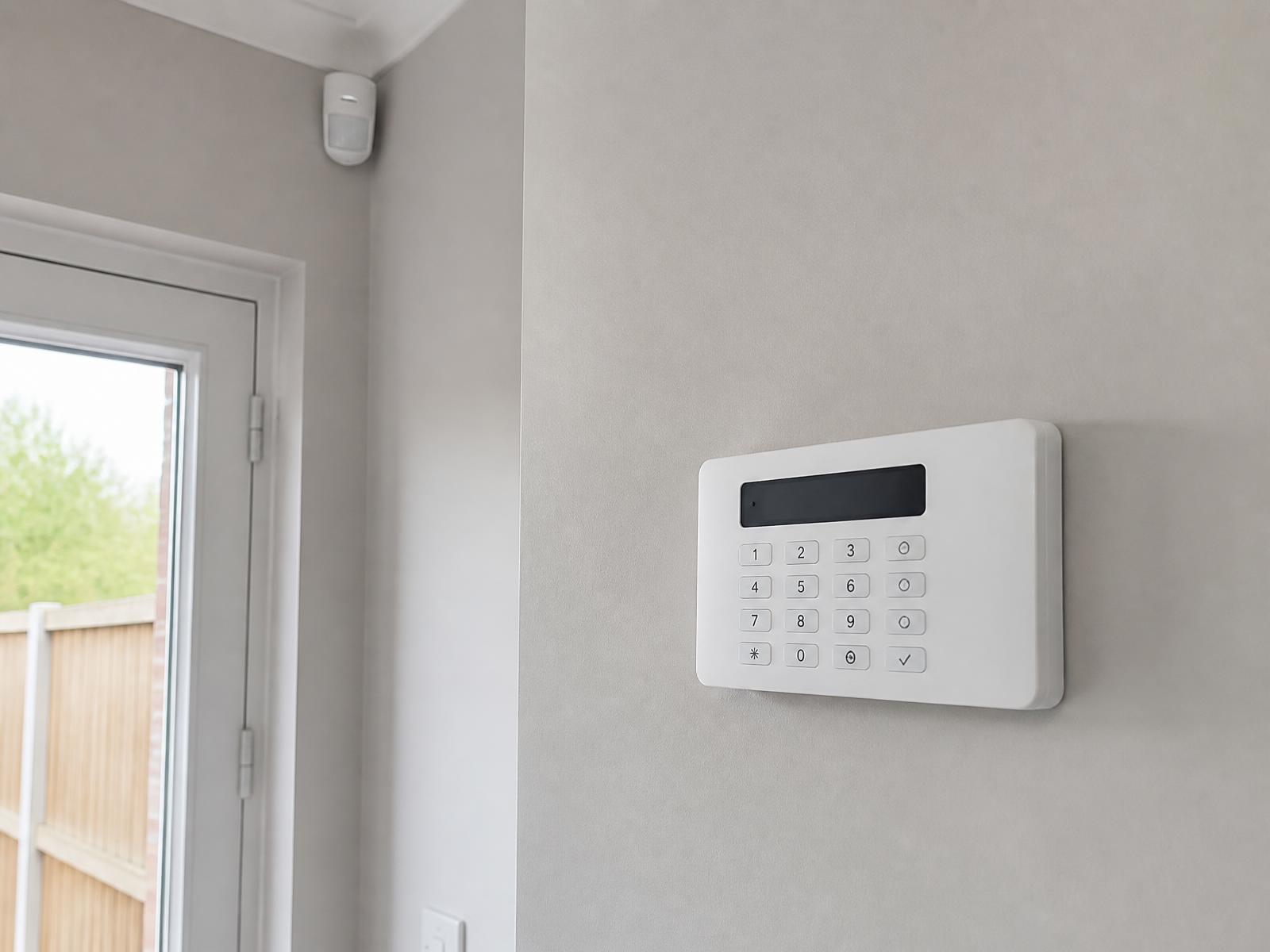
What it is, who it's for, and when you need it.
What it is
Who it's for
When you need it
Why professional install matters
A small fault today is a bigger bill tomorrow.
What ignoring it can cost you
- False alarms every week, neighbours stop calling, police stop responding
- Old systems where replacement parts are no longer manufactured, one fault and it's dead
- Bell-box on the wall but the system inside is disabled, a giveaway to any careful intruder
- Batteries on wireless sensors long-dead, half the house isn't actually protected
- No pet-tolerance on sensors, the alarm goes off every time the cat walks past
Common DIY mistakes we get called back to fix
- PIR sensor placed opposite a radiator or window, infrared triggers on the heat
- Door contact fitted to a slightly-warped door, triggers every gust of wind
- Grade 1 (basic) equipment used for a property that really needs Grade 2 or 3
- No entry/exit delay set, alarm triggers before you've reached the panel
- Battery-backup missing, first power cut and the alarm is disabled
A clear five-step system, no surprises.
You'll know exactly what's happening at every stage. No jargon, no gotchas, no charging you for parts you don't need.
- 01Step 1
Site survey
We walk the property with you, identify entry points that need contacts, rooms that need PIRs, and the best spot for the panel and external siren. Free of charge, honest quote after.
- 02Step 2
System design
Wired or wireless system chosen based on the property (wired for new builds and easy loft access, wireless for occupied older properties). Grade of equipment matched to insurance requirements.
- 03Step 3
Install
Panel, sensors, contacts, keypad, external siren and any smart-app hub fitted. Cabling run neatly through lofts and voids on wired systems.
- 04Step 4
Programming & test
Entry/exit routes programmed sensibly, pet-immune PIRs configured, part-set programs (nights, holidays) set up. Every sensor walk-tested.
- 05Step 5
Handover & warranty
You get a walkthrough of setting/unsetting, phone-app pairing, key-fob use and battery-change intervals. 2-year install warranty logged.
What a proper install actually gets you.
Reliable deterrent
A working, properly-programmed alarm is one of the biggest deterrents to opportunist burglary | Home Office research and every insurer will confirm it.
No false alarms
Sensors placed away from radiators, windows and pet paths. Programmed to your household's routine.
Phone-app control
Set, unset and check status from your phone anywhere. Immediate push notifications on activation.
No monthly subscription (optional)
Base install is subscription-free. Monitored response (a call centre that phones you and the police) available if you want it | but not required.
Pet-immune sensors
Modern PIRs ignore animals up to a set weight | perfect for households with cats or medium dogs.
2-year install warranty
Parts and labour on the install | panel, sensors, cabling, wireless links. If anything fails inside 24 months we come back at no cost.
Everything worth knowing before you book.
Materials, methods, variations and the situations we handle day-in day-out, so you can make an informed decision, not a guess.
Get a straight-talking quoteWired vs wireless, which is right?
Wired: the gold standard for reliability. Every sensor cabled back to the panel; no batteries in the sensors, no radio signal to lose. Ideal for new builds, houses with loft access, or during a refurb. Cheaper to run long-term (no wireless batteries to replace).
Wireless: the modern practical choice for occupied older houses where cable-runs would mean lifting carpets. Battery life on modern wireless sensors is 3–5 years. Rock-solid in operation with a quality system.
Hybrid: a wired panel with some wireless sensors, best of both. Common on installs where most of the house cables easily but one or two rooms (loft conversion, outbuilding) don't.
Grades: what matters for insurance
Grade 1: basic domestic; low-risk properties. Suitable for many detached houses in low-crime areas.
Grade 2: most common domestic spec; suitable where insurance requires an "audible" or "self-contained" alarm. What we'd typically recommend for higher-value homes.
Grade 3: high-value residential, small commercial. Required by some insurers for high-risk premises.
Always check with your insurer what grade they require, we spec to whatever you need and provide install documentation for the claim file.
Sensors, contacts and detection
PIR (motion) sensors: the workhorse. Pet-immune versions ignore animals up to a defined weight. Placed to give good coverage while avoiding false-alarm triggers.
Door and window contacts: magnetic switches on entry doors and vulnerable windows. Triggers instantly on opening.
Vibration / glass-break sensors: trigger on impact or breaking glass, useful on large windows and patio doors.
Smoke and CO integration: some panels integrate life-safety detectors as a secondary function. Handy but doesn't replace a dedicated fire alarm on commercial premises.
Monitoring options
Self-monitored: the default. Alarm rings on your phone via the app. You (or a keyholder) call the police if needed. Zero monthly cost.
Audible-only: external siren and strobe activate, no phone alerts. Suitable where mobile signal is poor.
Monitored response: an accredited monitoring station gets the signal, calls you and (if needed) dispatches police via a URN (Unique Reference Number) obtained through your local force. Monthly fee. Not required by most household insurance policies, but valued by commercial customers.
Residential vs small commercial
Residential focus is on ease of use, phone-app control and pet-tolerance. Commercial adds part-setting (setting a warehouse while keeping the office armed), remote user management, and often integration with CCTV so an alarm event triggers video recording.
Local engineers across seven counties.
Based in Stevenage and covering Hertfordshire, Bedfordshire, Essex and the counties between, including HA and EN postcodes of North London.
The questions we get asked every week.
Can't see yours? Call Larry on 07733 555269, he'll answer honestly, even if the answer isn't a sale.
How much does an intruder alarm cost to install?
+
Depends on system size, wired vs wireless, and grade required by your insurer. A typical 3-bed wireless system is a fixed-price 1-day install, call 07733 555269 for a quote against your actual property.
Wired or wireless, which should I get?
+
For a new build or during a refurb, wired every time, most reliable, no batteries. For a lived-in older house, wireless is the practical answer. We advise honestly at the free survey.
Do I have to pay a monthly monitoring fee?
+
No, every system we install works standalone with phone-app alerts and no monthly cost. Monitored response (call centre dispatching police) is optional if you want it.
Will it false-alarm every time my cat walks past?
+
No, modern pet-immune PIRs ignore animals up to a set weight (usually 25kg), and correct placement stops the vast majority of false triggers.
Can I control it from my phone?
+
Yes, every modern alarm we install has a phone app for setting, unsetting, checking status and receiving push notifications on activation.
How long does the install take?
+
A typical 3-bed domestic wireless install is a day. Larger or wired systems 1–2 days. Small commercial premises 1–3 days depending on size.
Can you upgrade my old alarm?
+
Yes, often we can keep the existing cabling and just replace the panel and sensors with a modern system. Much cheaper than a full rip-out.
Do you need an insurance-approved installer?
+
Some high-value policies require an NSI or SSAIB-registered installer. If yours does, we'll tell you straight so you can use an NSI or SSAIB-registered firm for that job, no point us installing something your insurer won't accept.
How often do batteries need changing?
+
On wireless sensors, typically every 3–5 years. The panel will warn you when a battery is low, well before it fails.
What's the warranty?
+
Two years on the install, panel, sensors, contacts, wireless links, cabling and external siren. If anything fails inside 24 months we come back at no cost.
Get it sorted properly, the first time, today.
Free honest quote before any work starts. 2-year warranty. You'll speak to Larry when you call, not a call centre.
Free call-out · Same-day slots · Open until 8pm, 7 days